“chemical life” search results (800)

Basic knowledge of boutique coffee what is tannin
Tannin, one of the main chemical components of coffee beans, accounts for about 7% of the total chemical composition of coffee beans. After extraction, tannic acid will turn into a yellowish powder and easily dissolve in water. Once heated, it will decompose to produce pyrosylic acid, making the taste of coffee worse. Because of this, a cup of brewed coffee will lose its taste and taste if it is not drunk immediately.
2014-11-18 Coffee knowledge coffee basics coffee common sense tannin
Cherish life and stay away from the harm of instant three-in-one coffee
In a way, the use of chemicals or synthetic flavors to make any drink is nothing new. Now that any sweet and delicious fruit juice can be prepared, what's the problem with just coffee? Thanks to the development of science and technology, modern people can make almost everything you want quickly: people love fried chicken, which shortens the time it takes for chickens to grow up; pure fruit juice
2015-03-13 Cherish life stay away instant three-in-one coffee harm say use transform
Color, Flavor and characteristic changes of Coffee beans during roasting difference in roasting degree of Coffee
Roasting is the last and most important step in the processing of coffee beans after being picked. Raw coffee beans cannot be directly used as drinking coffee. All coffee beans must be roasted before grinding and brewing. Unbaked coffee is often called raw coffee, which has a shelf life of up to one year compared with roasted coffee. The size of raw coffee beans
2016-01-22 Coffee beans roasting process medium color flavor characteristics sex variation coffee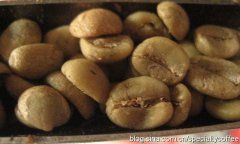
Coffee common sense Coffee roasting process after picking
Generally speaking, coffee roasting is a time-temperature dependent process in which physical changes and chemical reactions occur in raw coffee. Roasting is the last and most important step in the processing of coffee beans after they have been picked. Green coffee beans cannot be used directly to make drinking coffee. All coffee beans must be roasted before grinding and brewing. not
2014-11-14 Coffee knowledge Fine coffee knowledge Coffee picking Coffee roasting
illy coffee company brand culture illy coffee latest introduction
Illy coffee is very focused on the roasting process, in which the beans are placed in a large rotating cylinder. In the course of 12-15 minutes, the beans lose about 20% of their weight, but expand to 1.6 times their original volume. A series of physical and chemical reactions take place within coffee beans to create more than 1500 substances that are the source of espresso flavor and aroma. the roasting process
2015-12-17 illy coffee company brand culture latest presentation
Coffee training knowledge about the chemical composition of coffee
Caffeine: caffeine is the most eye-catching of all the ingredients in coffee. It belongs to a kind of phytoxanthin (animal muscle component). It has the same properties as theobromine contained in cocoa, green tea contains the same theophylline, and the percentage of reduction after baking is very small. Caffeine has a very wide range of effects. will affect the human brain, heart, blood vessels, gastrointestinal, muscle and kidney and other parts, the right amount of coffee
2014-10-08 Coffee knowledge coffee composition coffee chemical composition
Chemical composition of coffee caffeine tannin
Caffeine: caffeine is the most eye-catching of all the ingredients in coffee. It belongs to a kind of phytoxanthin (animal muscle component). It has the same properties as theobromine contained in cocoa, green tea contains the same theophylline, and the percentage of reduction after baking is very small. Caffeine has a very wide range of effects. will affect the human brain, heart, blood vessels, gastrointestinal, muscle and kidney and other parts, the right amount of coffee
2015-06-13 Coffee Chemistry ingredients caffeine Ning Acid all medium
The basic chemical reaction that takes place during coffee roasting the degree of coffee bean roaster
I, when heated, is converted into isomers cellulose III and cellulose IV. The structure of coffee is a well-developed matrix, which improves the consistency of quality and contributes to the uniform spread of heat during baking. Cellulose in coffee is embedded in lignocellulose (an amorphous matrix containing hemicellulose and cellulose-containing lignin).
2016-10-18 Coffee roasting process medium hair raw basic chemical reaction coffee beans roaster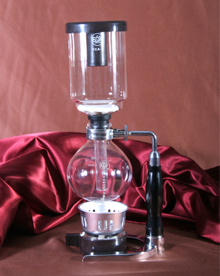
The principle of operation of the siphon pot: illustrate how to use the siphon pot to make coffee is caused by the chemical principle.
Drinking coffee is a kind of enjoyment and an indispensable element in modern life. Her acidity, bitterness and fragrance deeply infect everyone who loves coffee, whether they are senior coffee enthusiasts or beginners of coffee. Making a cup of coffee with strong flavor every day is as natural as brushing your teeth and washing your face. It is generally believed that drinking coffee is a kind of enjoyment, and in addition to enjoyment, more people
2016-01-07 Siphon operation principle diagram what use pot making coffee how chemistry lead to
What are the "chemical" ingredients in a cup of coffee?
The taste is delicious and fragrant. As can be seen from the advertising words of coffee, flavor is the soul of coffee. Recently, "Coffee Flavor Chemistry", co-written by Dr. Zeng Fankui of Lanzhou Institute of Chemical Physics of Chinese Academy of Sciences and Professor ou Shiyi of Food Department of Jinan University, was published by Jinan University Publishing House. This is the first academic monograph on coffee processing in China. Set
2015-09-09 One cup coffee medium chemistry ingredients which taste great Didi fragrant
Basic knowledge of coffee the chemical composition of coffee
Caffeine: caffeine is the most eye-catching of all the ingredients in coffee. It belongs to a kind of phytoxanthin (animal muscle component). It has the same properties as theobromine contained in cocoa, green tea contains the same theophylline, and the percentage of reduction after baking is very small. Caffeine has a very wide range of effects. will affect the human brain, heart, blood vessels, gastrointestinal, muscle and kidney and other parts, the right amount of coffee
2014-11-21 Coffee knowledge coffee basics coffee chemical composition
Basic training of baristas Chemical composition of Coffee
Caffeine: caffeine is the most eye-catching of all the ingredients in coffee. It belongs to a kind of phytoxanthin (animal muscle component). It has the same properties as theobromine contained in cocoa, green tea contains the same theophylline, and the percentage of reduction after baking is very small. Caffeine has a very wide range of effects. will affect the human brain, heart, blood vessels, gastrointestinal, muscle and kidney and other parts, the right amount of coffee
2014-12-30 Coffee Basics training knowledge Chemistry ingredients caffeine all
What is the chemical composition of a cup of coffee?
Caffeine is the most eye-catching of all the ingredients of coffee. It belongs to a kind of phytoxanthin (animal muscle component). It has the same properties as theobromine contained in cocoa, green tea contains the same theophylline, and the percentage of reduction after baking is very small. Caffeine has a very wide range of effects. will affect the human brain, heart, blood vessels, gastrointestinal, muscle and kidney and other parts, the right amount of coffee
2015-02-27 Coffee ingredients a cup what chemistry caffeine coffee all the most
The chemical composition of coffee what are the ingredients in coffee beans?
Caffeine: caffeine is the most eye-catching of all the ingredients in coffee. It belongs to a kind of phytoxanthin (animal muscle component). It has the same properties as theobromine contained in cocoa, green tea contains the same theophylline, and the percentage of reduction after baking is very small. Caffeine has a very wide range of effects. will affect the human brain, heart, blood vessels, gastrointestinal, muscle and kidney and other parts, the right amount of coffee
2015-10-14 Coffee chemistry ingredients coffee beans what caffeine coffee all
The development and change of coffee!
1. Macro-environmental analysis with the development of the times and the further change of people's concept of life, the coffee industry is also developing at a rapid speed. The promotion of urbanization and the construction of culture are the driving force for the development of coffee shops. Government policy support for college students to start a business. With the popularity of coffee culture and the rise of petty bourgeoisie sentiment, coffee shops are becoming one of the ways for people to communicate and enjoy themselves.
2014-08-28 The development of coffee
The development and change of coffee!
1. Macro-environmental analysis with the development of the times and the further change of people's concept of life, the coffee industry is also developing at a rapid speed. The promotion of urbanization and the construction of culture are the driving force for the development of coffee shops. Government policy support for college students to start a business. With the popularity of coffee culture and the rise of petty bourgeoisie sentiment, coffee shops are becoming one of the ways for people to communicate and enjoy themselves.
2014-08-28 The development of coffee
Coffee raw bean label: explanation of "GP", "EP" and "SWP"
The words EP or SWP sometimes appear on raw bean labels, which are two common ways to remove caffeine. Caffeine and decaf caffeine, caffeine, is a natural ingredient in coffee. In addition to coffee, many foods we come into contact with in our daily life also contain this ingredient, such as tea, chocolate, cola, cold medicine and so on. (reference article: coffee
2015-12-01 Coffee raw beans labels SWP explanation sometimes appear
Introduction to the characteristics of Galapagos Coffee Flavor and taste with balanced low acidity
Galapagos Islands coffee is recognized as green natural coffee, because the Ecuadorian government has designated the islands as a national park, not only does it no longer allow the reclamation of new agricultural land, but also forbids the use of chemical fertilizers, pesticides, herbicides and other chemicals. Although the elevation of about 200m on the island is very low, the climate of this area is equivalent to terrestrial 1000m1800m due to the special influence of the sea.
2016-09-13 Balanced low acidity Lapa Goss coffee flavor taste producing area characteristics
Introduction to Hasunda Coffee Garden in Ecuador Coffee Manor
Ecuadorian coffee has distinctive South American coffee characteristics. The fragrance is soft, as if you can go back to the ancient and mysterious Inca empire. Coffee is a good history, you need to savor it carefully in order to understand the vicissitudes of life. Balanced with low acidity and rich aroma. The bitter taste is not obvious, the taste is clear, but there is a lingering aftertaste for a long time. Excellent
2016-08-06 Aroma soft Ecuador coffee manor producing area flavor taste characteristics introduction
The harm of instant coffee in healthy life
The first is essence: it starts with the production process of instant coffee. Instant coffee is produced by drying after extracting active ingredients from roasted coffee beans. In this process, some aromatic substances will inevitably be lost, so that the flavor and taste of the finished product is not as rich and pure as that of directly roasted coffee. The production process is generally as follows: pretreatment, roasting, grinding, extraction, concentration and drying, in which the pretreatment is
2014-11-03 Coffee knowledge coffee health coffee life instant coffee